Solution
The system manages the full product lifecycle across two entry paths, a multi-supplier cost structure, bilingual content, and multi-channel publishing to Shopify and beyond.

Product Entry & Supplier Feeds
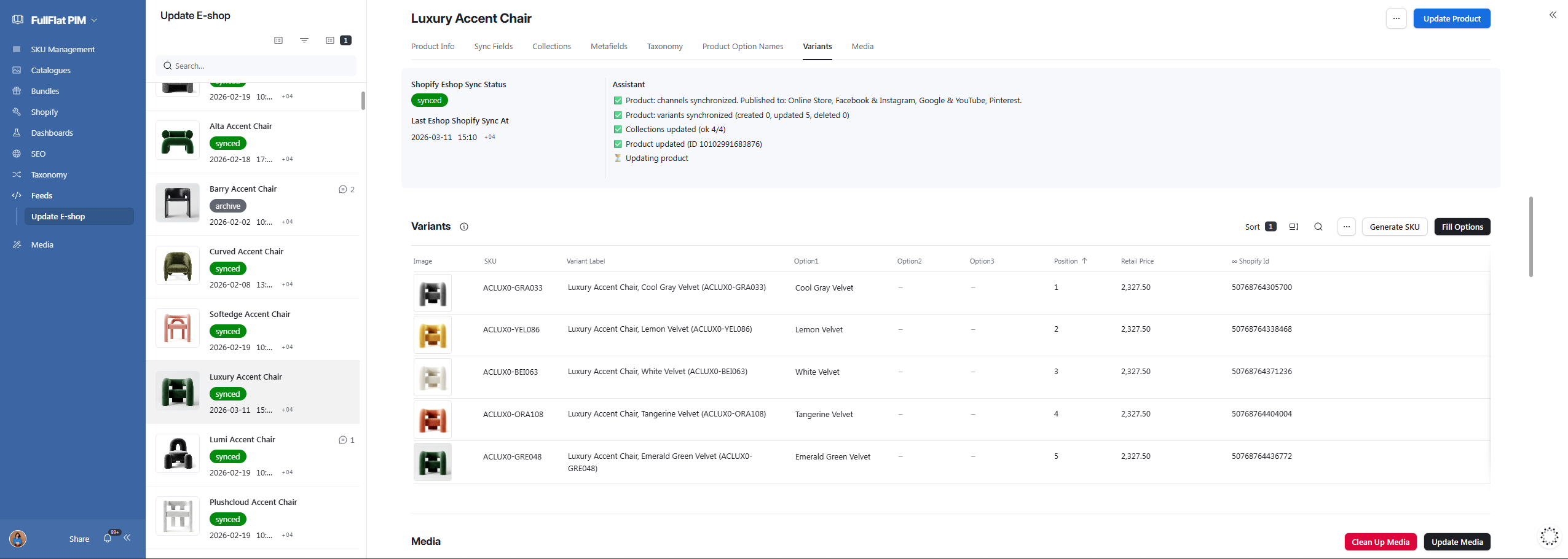
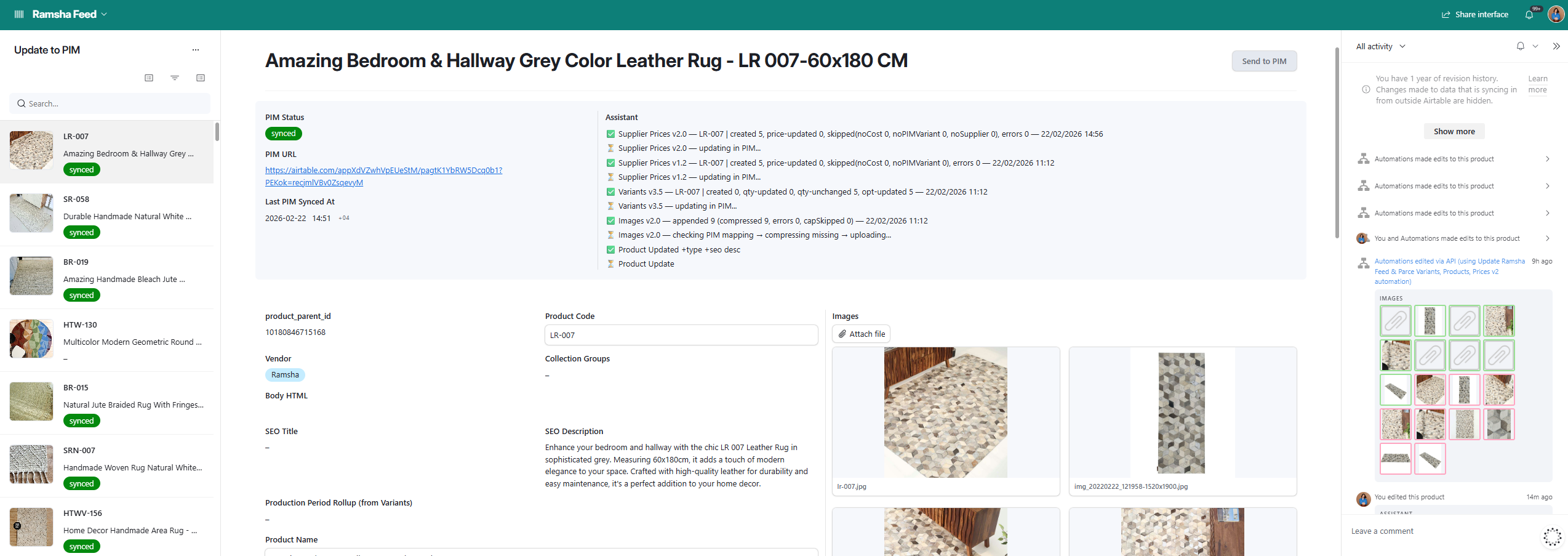
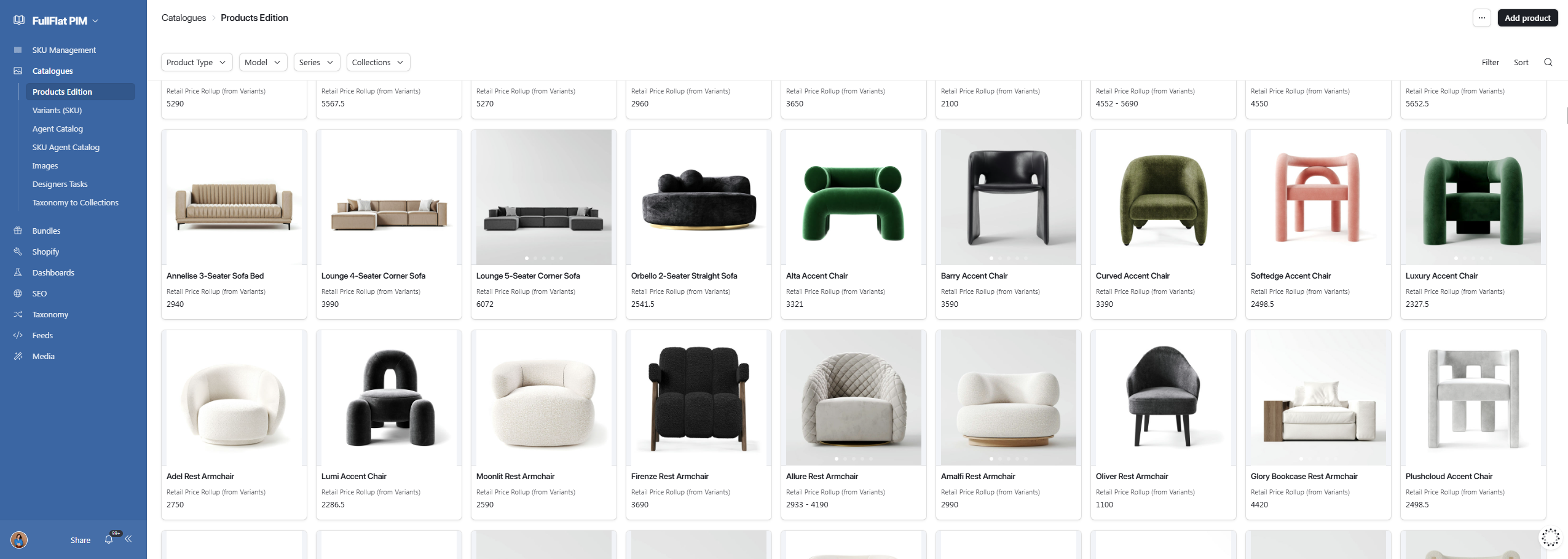
Products enter PIM through two paths. Own furniture is created directly in the system — product, variants, materials, and 3D-rendered visuals. Each variant's SKU is generated through an automated, AI-assisted process built on a Material/Color/Size template, with a built-in uniqueness check that catches collisions before a SKU is saved — keeping codes consistent across thousands of variant combinations with zero manual entry. Accessories are imported from supplier feeds with n8n-automated sync of catalog data, pricing, stock levels, and images. The feed interface tracks sync status and update logs for every product, ensuring data consistency between supplier systems and PIM.
Multi-Supplier Cost Structure
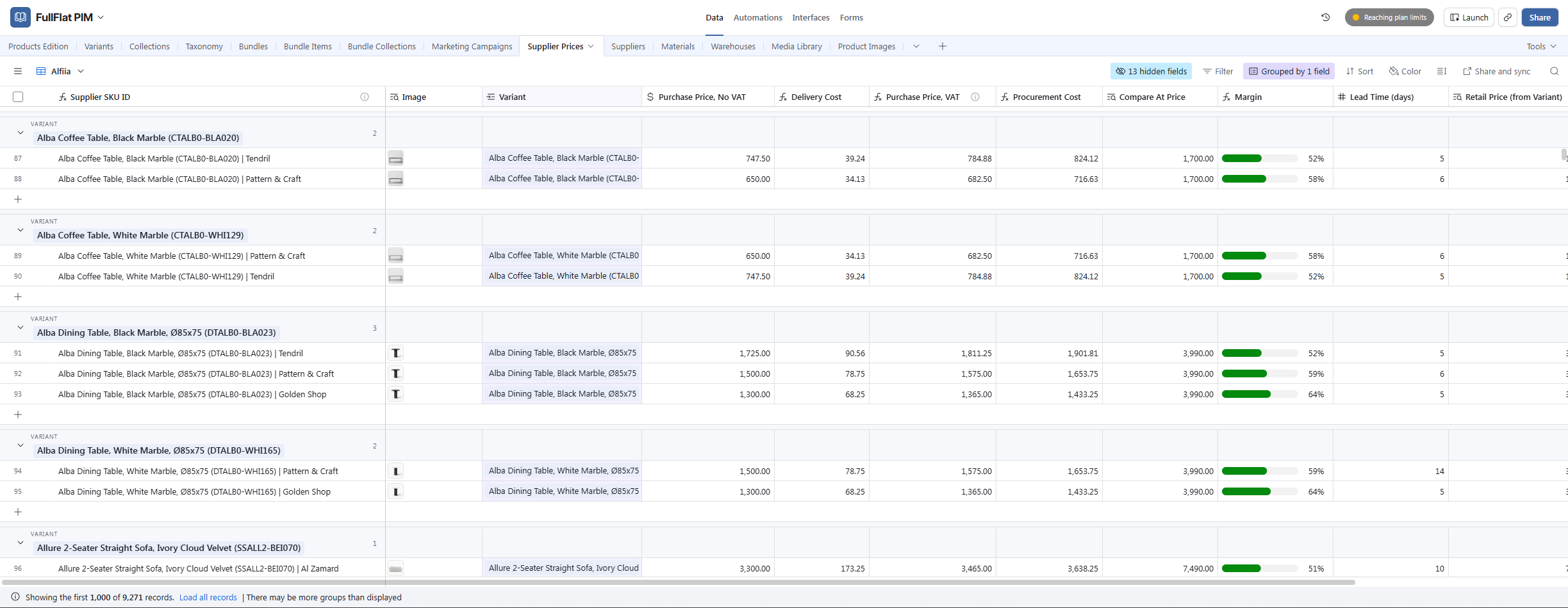
Since products are sourced from different contract manufacturers at different prices, cost couldn't live on the product record alone. A dedicated linked Product × Supplier pricing table ties cost to the specific product-supplier pair, giving accurate unit economics regardless of which manufacturer fulfills a given order — something Shopify's native single-cost-field model can't represent.
Bilingual Content & AI-Generated Imagery
Every product carries full English and Arabic content side by side, with Arabic translations managed directly by the content manager in Airtable. For lifestyle imagery, rendering each product into realistic interior scenes was costly with traditional 3D rendering — instead, product renders are run through a third-party AI interior-generation service against a fixed set of template scenes, producing lifestyle imagery at a fraction of the cost and time.
Enrichment, SEO & Publishing
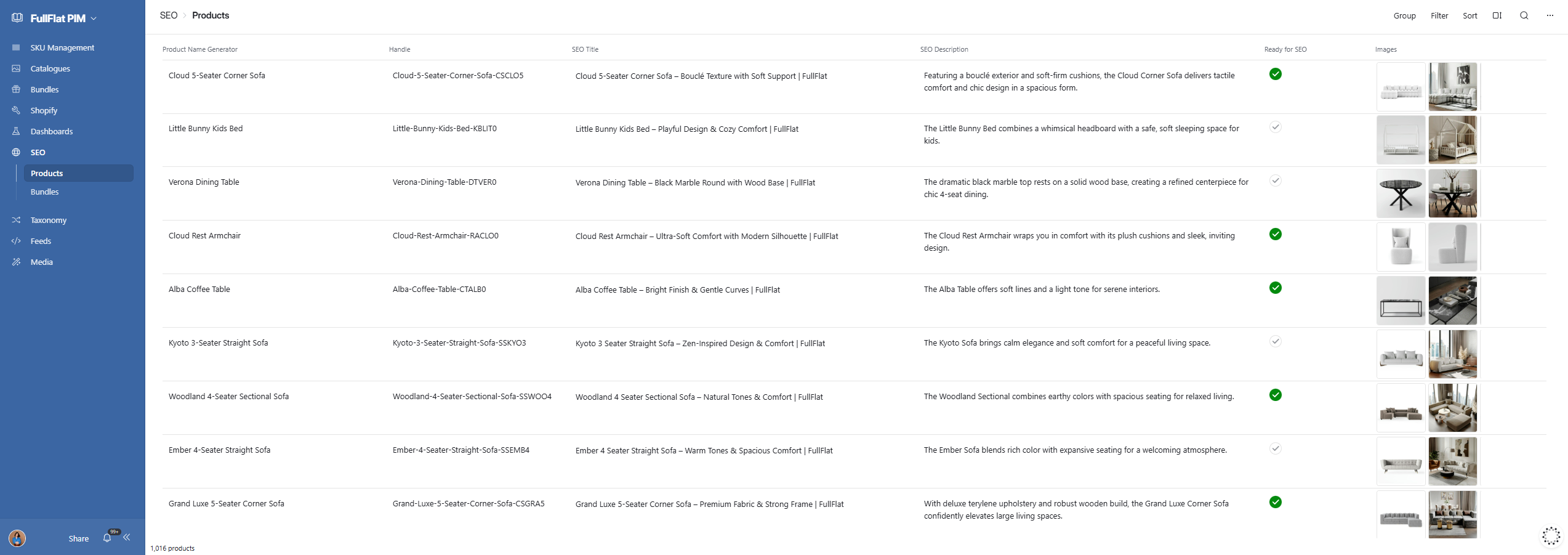
Each product goes through a structured enrichment process: taxonomy mapping, product attributes and metafields, SEO titles and descriptions. The SEO specialist works in a dedicated view across 1,000+ products, tracking readiness status for each item.
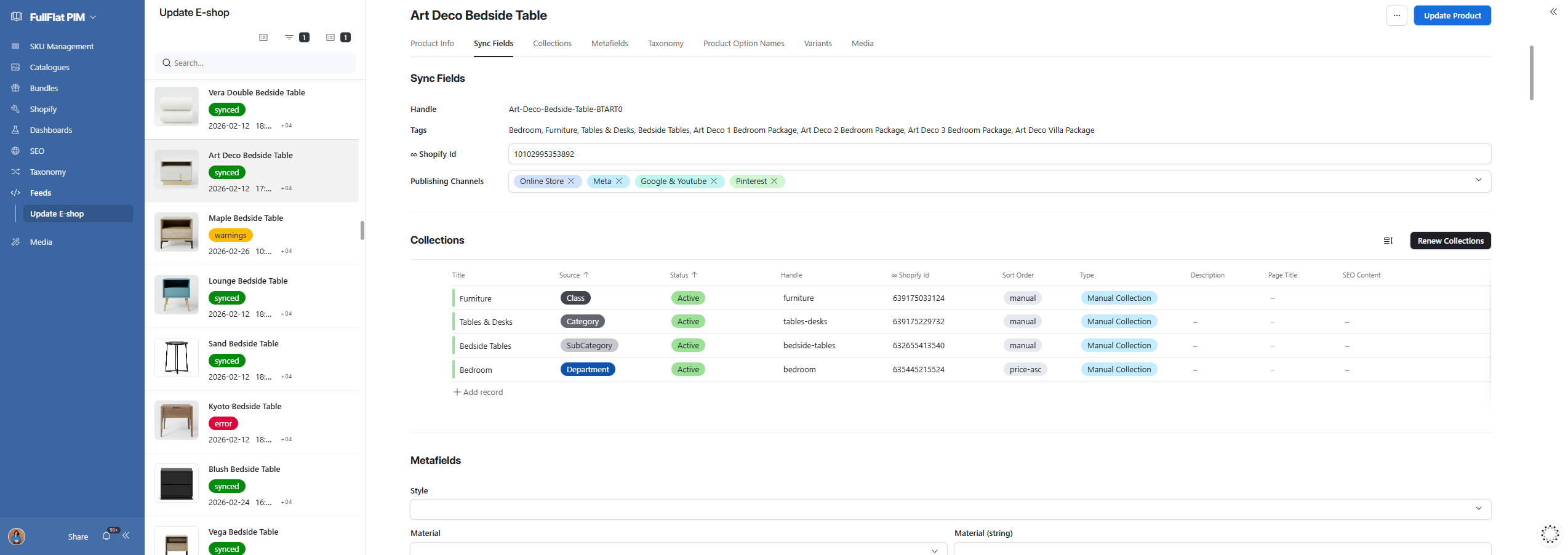
Ready products are published to Shopify with full control over publishing channels — Online Store, Meta, Google & YouTube, Pinterest. Each product carries its taxonomy-driven collections, tags, metafields, and media. Sync status is tracked per product with two methods: Airpower for bulk updates and Shopify API for individual products with variants and bundles.