Solution
Access to B2B pricing is built through four pieces: verified registration, CRM-integrated onboarding, a dedicated B2B product experience, and automated invoicing.
VIES-Verified Registration
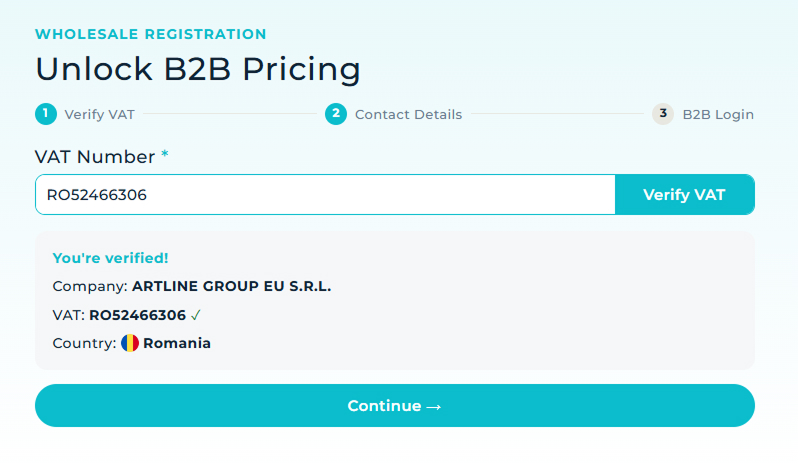
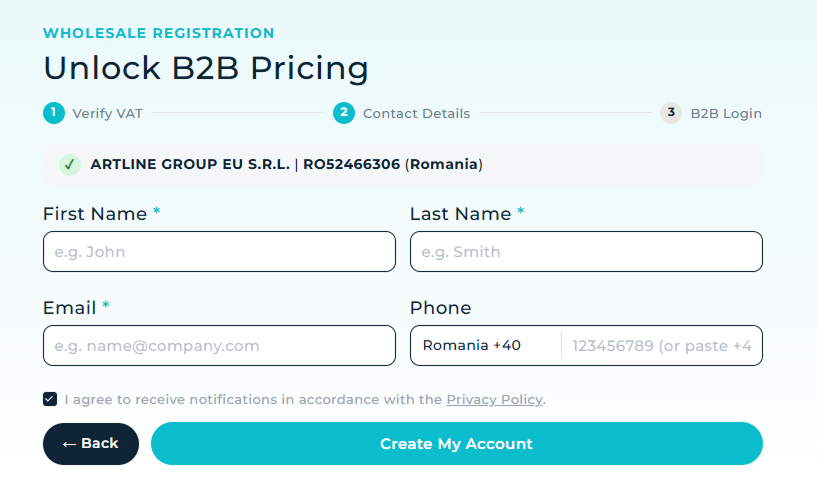
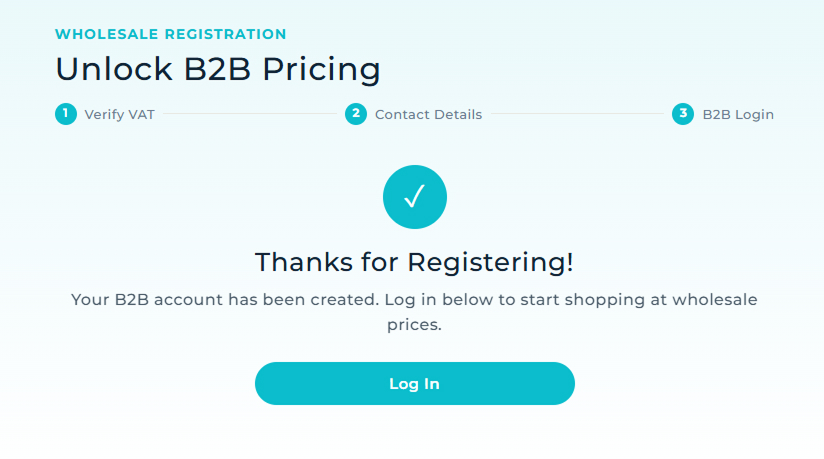
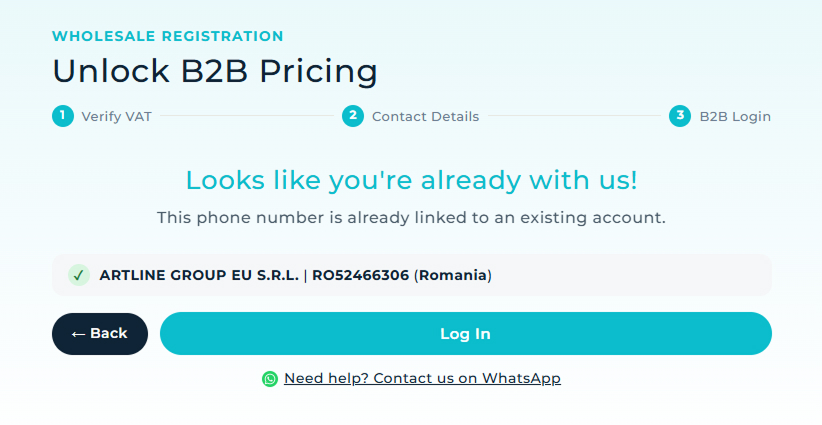
Wholesale registration runs as a three-step flow: VAT verification, contact details, and account activation. The VAT number is validated in real time against VIES, the EU's official VAT registry, pulling back the registered company name and country so the business can confirm it's their own before continuing. Duplicate checks run against phone number, email, and VAT number together: if any of them already belong to an existing account, registration stops and offers a direct login instead, with a WhatsApp fallback for anyone who gets stuck.
B2B Sales Funnel Integration
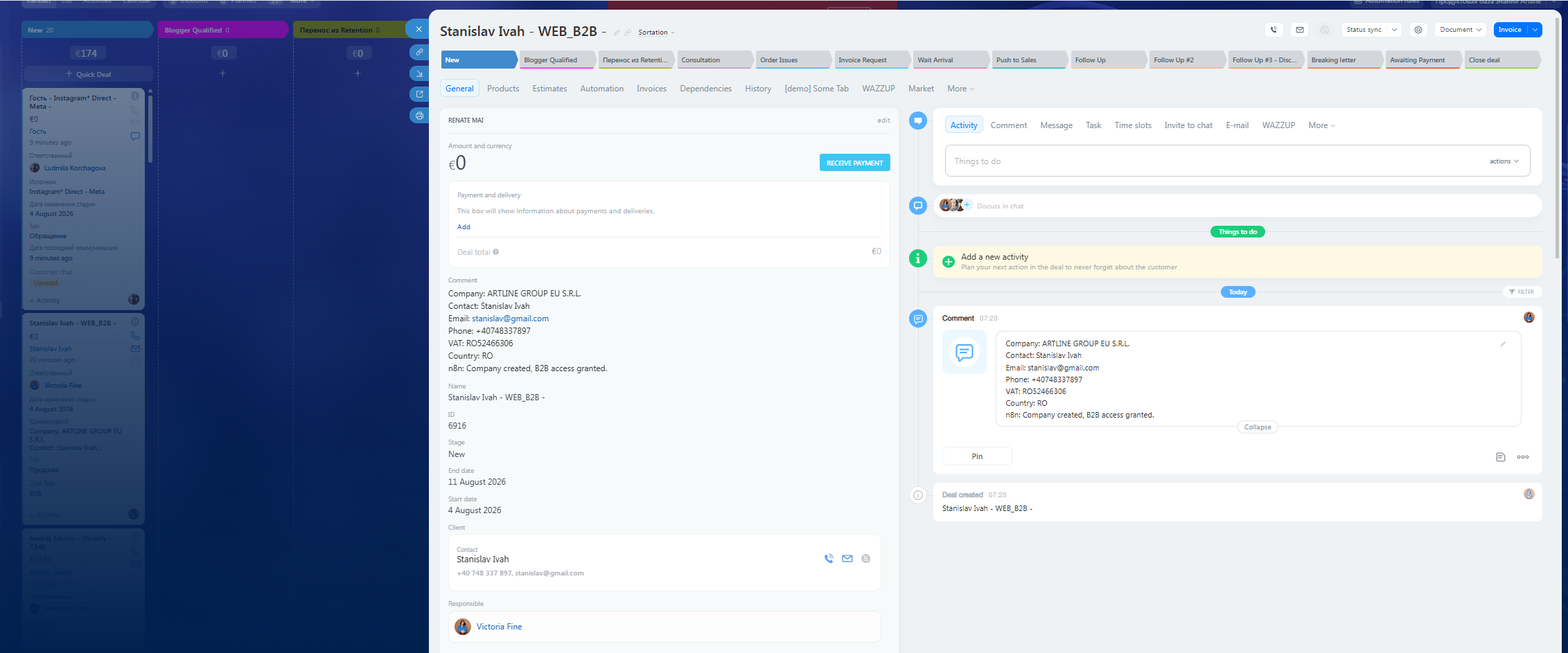
Each step of the registration flow triggers an n8n workflow that creates and updates a deal in the B2B sales funnel, with a login logged at every step: VAT verification, contact details, and final activation. That gives the sales team full visibility into where a business is in the signup process, rather than only seeing completed registrations.

On a successful registration, a matching Customer and Company record is created in both Shopify and Bitrix24, cross-linked with direct URLs between the CRM contact and the Shopify customer account so either team can jump straight to the other system. Every user action from the registration flow, including UTM parameters, is logged to the CRM timeline, keeping the full acquisition context attached to the deal instead of getting lost after signup.
Market-Based Pricing Tiers
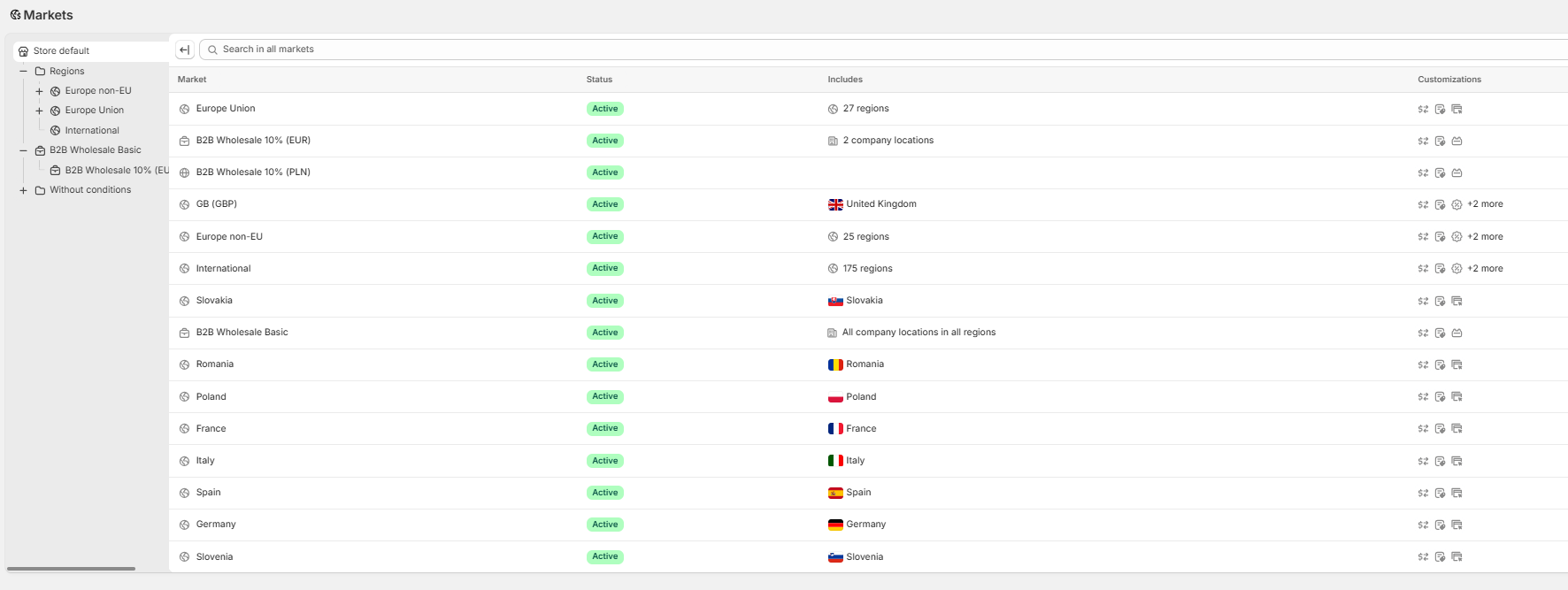
Discount tiers are built as separate B2B markets in Shopify: a base wholesale market plus percentage-discount markets layered on top, each scoped to specific company locations rather than applied account-wide. Markets are also split by currency (EUR, PLN) so a tier's discount applies correctly regardless of which currency a business buys in. This sits alongside the storefront's regional markets (by country and currency), so B2B and B2C pricing coexist in the same Markets structure without conflicting.
B2B Product Experience
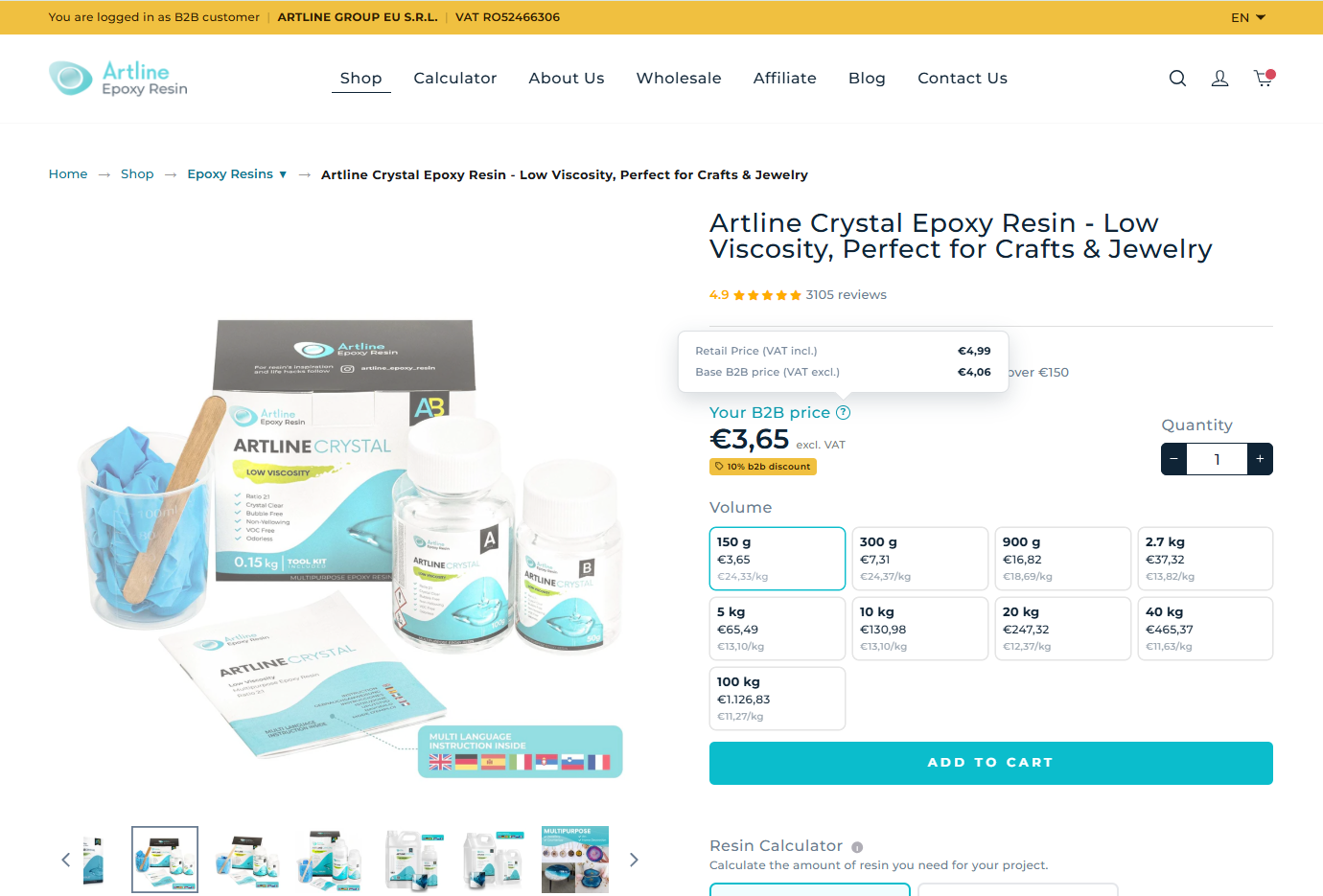
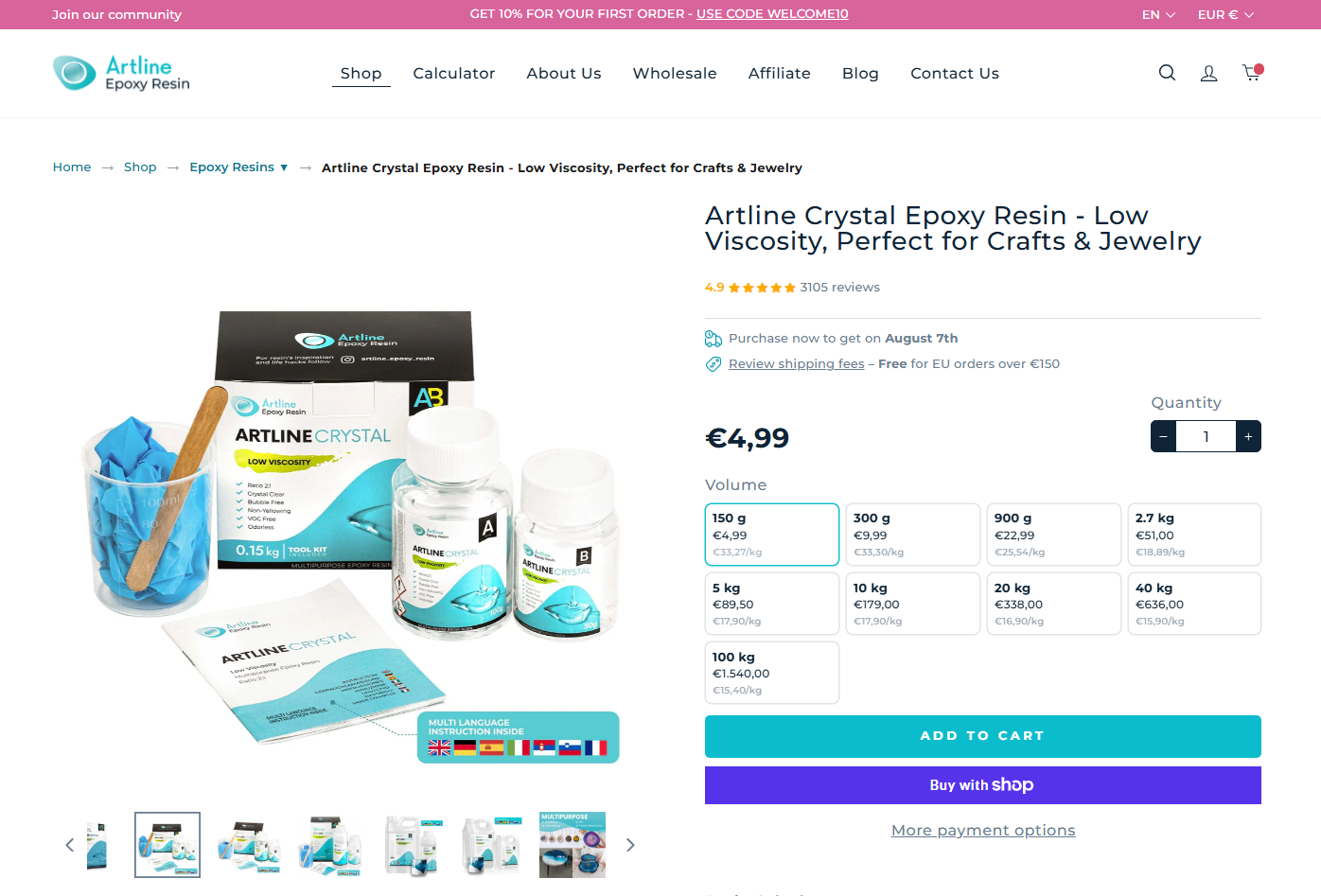
Logged-in B2B customers see a persistent banner confirming their verified company and VAT number, and every product page shows VAT-exclusive pricing broken down explicitly: retail price, base B2B price, and the customer's actual tier price with the discount percentage called out. Bulk volume options extend beyond the standard B2C range, up to 100 kg for this product, with a per-kg price shown at every tier so business buyers can compare cost efficiency at a glance. Side by side with the standard B2C product page, the difference in pricing structure and volume range is immediately clear.